From the classroom to the chamber: Birmingham students step into the shoes of global climate negotiators
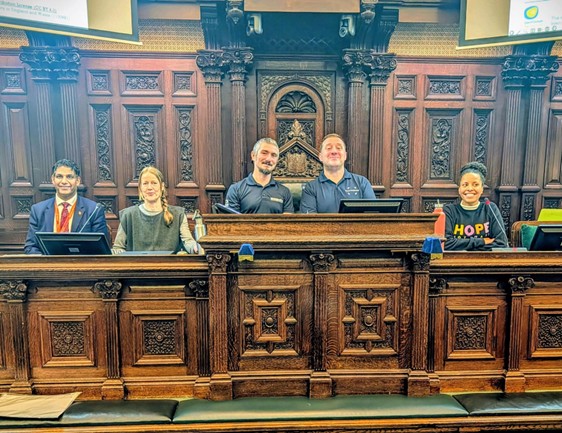
On 12 November, the Council House Chamber hosted Birmingham’s Model United Nations Climate Negotiations, bringing together pupils from ten schools across the city.
Twelve delegations took part, each representing a country and arriving prepared with researched positions and statements. The event simulated global climate talks, giving young people first-hand experience of the debates, challenges, and compromises that shape international COP negotiations.
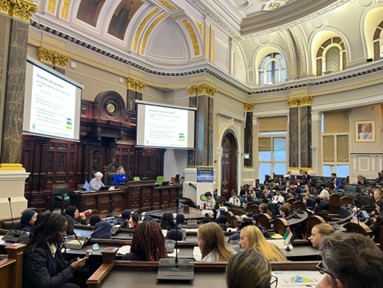
Opening statements: setting the stage
The day began with a warm welcome from Ellie Horwitch-Smith, the Council’s Assistant Director for Net Zero. From there, the students took centre stage. Each delegation delivered a one-minute opening statement, presenting their nation’s achievements, ambitions and deep concerns in the climate crisis.
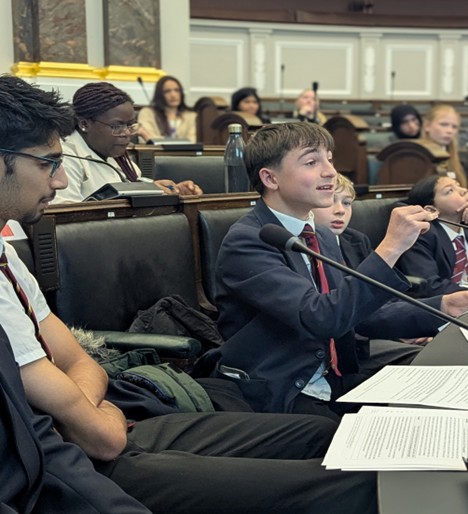
Many different perspectives were shared. China highlighted its global role in producing renewable energy technologies worldwide and its investment in developing countries through the Belt and Road Initiative. For them, the climate transition represented an opportunity for economic growth.
For Barbados, the message could not have been more different. Facing rising sea levels that threaten the island’s future, the pupils spoke with urgency about the lack of global action and the disproportionate impact on small island states. Their statement called out historically high-emitting nations, including the UK, US and China, urging them to recognise their moral responsibility.
Students representing the UAE navigated the difficult balance between their reliance on fossil fuels and their efforts to diversify into tourism, while Indonesia spoke openly about the challenge of stepping away from coal due to the jobs and livelihoods it sustains.
What became clear early on was that the pupils had not only researched their countries thoroughly, but they had also embraced their roles and understood the political tensions influencing climate negotiations.
Debate heats up: a vote and a challenge
A preliminary vote asked delegates whether countries were doing enough to meet emissions targets. The result was unanimous: progress was only “partial”, and a great deal more needed to be done.
With that verdict delivered, questioning began. Australia challenged Brazil on its mixed record in protecting the Amazon. Barbados confronted the USA over climate denial and pointed out China’s emissions footprint. The USA countered by questioning the UAE’s dependence on oil, while defending its own partnerships with Canada and Mexico.
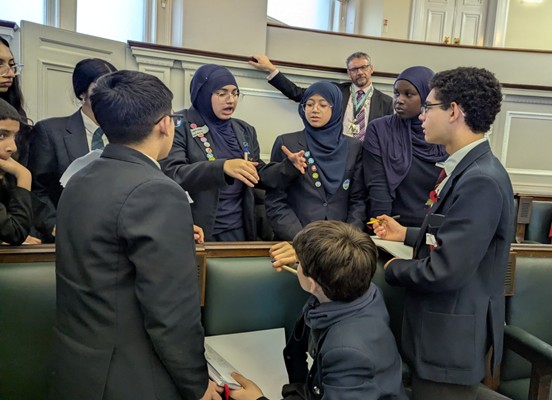
Brazil defended its reforestation efforts with data. China highlighted $4.5bn of investment in climate action abroad. Indonesia offered an honest explanation of the economic barriers it faces. The discussions revealed the same difficult dynamics found in real COP negotiations, competing interests, development demands, and profound climate injustices.
Negotiating for solutions
In the late morning, students split into themed groups to draft proposals on
- sustainable cities
- energy transitions
- forests and food
- ocean protection.
These “closed-door” sessions allowed students to negotiate, persuade, and compromise.
Some proposals were widely supported, including a UK proposal for richer countries to invest each year in green projects in more vulnerable nations.
Others were more controversial. In the forests and food group, the United States suggested funding mangrove planting in Indonesia and tree planting in Brazil, but with loan deals that mainly benefited US companies. Several countries criticised this approach for being too exclusive.
Disagreements were frequent but constructive. Students challenged each other confidently and showed a strong understanding of global politics and environmental issues.
Green careers and schools support
After a busy morning of diplomacy, the pupils had the opportunity to explore green careers and skills. Employers, including Equans, National Grid and Kier, spoke to pupils about future opportunities in the rapidly growing low-carbon sector. Council teams showcased schemes such as free school air-quality monitors, the Safer School Streets programme, and DfE projects including Let’s Go Zero, the National Education Nature Park, and Climate Ambassadors.
These initiatives form a crucial part of the city’s journey to net zero and demonstrate the support available to schools that want to reduce emissions, boost biodiversity and embed climate education.
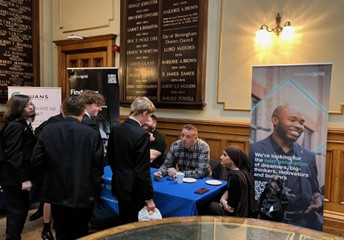
A lively Q&A: students challenge local leaders
The final session of the day was a Q&A panel featuring Cllr Mahmood, Cabinet Member for Waste, Transport and Environment, alongside experts in clean air, transport, energy and the built environment. Students asked thoughtful, sometimes challenging questions:
- What do the air-quality monitors do?
- How do you decide which schools get solar panels?
- Are you the one who made the speed limit 30 miles per hour?
From technical discussions about monitoring equipment to explanations of funding models and local transport policy, the experts provided detailed responses.
One particularly powerful moment came when a student, who cares for their disabled parent, asked how sustainability could be made more accessible for people with disabilities. Panellists shared insights into accessible design, disability-friendly transport, and the importance of including disabled communities in climate conversations, recognising their often higher energy needs.
A day that showcased young leadership
What stood out throughout the event was the confidence, intellect and passion of Birmingham’s young people. They asked tough questions, defended their positions and embraced the challenge of finding consensus.
The Model UN Climate Negotiations demonstrated not only the potential of young people to shape the future but also their willingness to engage with the hard questions that adults often avoid. Their voices will continue to be essential as Birmingham works towards a fair, inclusive and ambitious net-zero future.